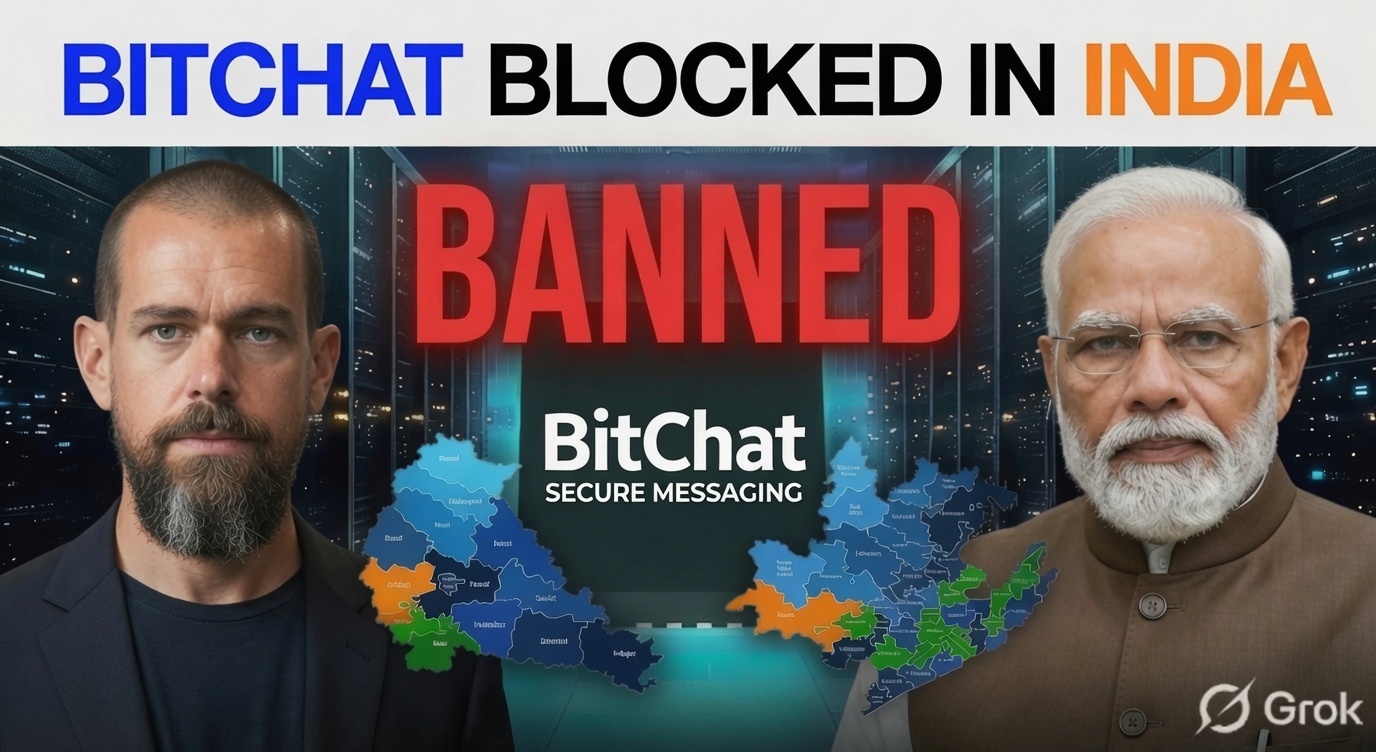
India Orders GitHub Takedown of Bitchat
In a significant development at the intersection of technology, law enforcement, and civil liberties, the Indian government on July 24, 2026 ordered the Microsoft-owned platform GitHub to remove all repositories hosting Bitchat — the open-source, offline messaging application developed by Twitter (X) co-founder Jack Dorsey.
The order was issued by the Indian Cyber Crime Coordination Centre (I4C) under the Ministry of Home Affairs (MHA), citing concerns that the app could be used to bypass internet shutdowns and evade lawful surveillance during public-order situations.
Quick Overview
| Aspect | Details |
|---|---|
| App | Bitchat — decentralized Bluetooth mesh messaging app |
| Developer | Jack Dorsey (Twitter co-founder, Block CEO) |
| Order Issued By | Indian Cyber Crime Coordination Centre (I4C), MHA |
| Legal Basis | Section 79(3)(b) of the Information Technology Act, 2000 |
| Platform Targeted | GitHub (3 repositories hosting Bitchat code) |
| Timeline | Late Thursday, July 23, 2026 (3-hour compliance window) |
| Context | CJP protests against national exam scandal in Delhi |
| Key Concern | App enables communication without internet, registration, or logging |
What is Bitchat?
Bitchat is a decentralized messaging application that uses Bluetooth Low Energy (BLE) mesh networking to enable peer-to-peer communication between smartphones without requiring:
- Internet connectivity
- Centralized servers
- Phone number or email registration
- Any form of user identity verification
How Bitchat Works
The technology behind Bitchat represents a significant shift from traditional messaging apps:
- Bluetooth Mesh Network: Each phone running Bitchat acts as both a sender and a relay node. Messages are passed from one phone to another via Bluetooth, creating a mesh network that can cover substantial distances.
- Offline-first Design: The app is designed specifically for scenarios where internet connectivity is unavailable or deliberately suspended.
- End-to-end Encryption: Messages are encrypted, ensuring that even relay nodes cannot read the content being transmitted.
- Bitcoin Transaction Relay: Bitchat can also pass bitcoin transactions offline through the mesh network until a device with internet connectivity broadcasts them to the blockchain.
Jack Dorsey released Bitchat as open-source software in July 2025, describing it as a tool to keep communication alive during internet blackouts, natural disasters, or state-imposed shutdowns.
The Government Order
Which Agency Issued the Order?
The Indian Cyber Crime Coordination Centre (I4C) is the agency that issued the takedown notice. Key facts about I4C:
- Established under the Ministry of Home Affairs
- Serves as India's nodal agency for combating cyber crime
- Coordinates cyber crime-related activities across all states and law enforcement agencies
- Operates the National Cyber Crime Reporting Portal
- Works closely with intermediaries (social media platforms, hosting services) to remove unlawful content
Legal Basis: Section 79(3)(b) of the IT Act
The order was issued under Section 79(3)(b) of the Information Technology Act, 2000. Understanding this provision is crucial for competitive exam preparation:
Section 79 — Exemption from liability of intermediary in certain cases
(3) The provisions of sub-section (1) and sub-section (2) shall not apply if—
- (a) the intermediary fails to observe the due diligence while discharging his duties; or
- (b) the intermediary fails to remove or disable access to any information, data, or communication link hosted by it upon receiving actual knowledge or being notified by the appropriate government agency that such information is being used to commit unlawful acts.
Key Points About Section 79 IT Act:
- It provides safe harbour (exemption from liability) to intermediaries
- This safe harbour is conditional upon the intermediary observing due diligence
- Upon receiving a government notification, the intermediary must remove the content or risk losing its safe harbour protection
- The provision is part of India's legal framework for regulating online content
Notice Details
The I4C notice directed GitHub to:
- Remove or disable access to three specific repositories hosting Bitchat
- Comply within a three-hour window
- Cited that Bitchat's architecture "significantly impedes lawful interception, attribution, and investigation by law enforcement agencies"
Jack Dorsey's Response
Jack Dorsey publicly shared the takedown notice on X (formerly Twitter), with the caption:
"The government of India does not like technologies like Bitchat and wants it taken down"
Context: The CJP Protests
Background of the Protests
Since July 20, 2026, cities across India witnessed some of the largest demonstrations in recent years as student protesters under the banner of Cockroach Janta Party (CJP) rallied against a national examination scandal.
Government Response to Protests
The government responded with:
- Internet suspensions: Repeated mobile internet shutdowns ordered around protest sites in New Delhi
- Section 144: Imposition of prohibitory orders in affected areas
- Police action: Use of tear gas and baton charges to disperse crowds
Role of Technology in Protests
Researchers documented that protesters turned to Bluetooth mesh applications — including Bitchat and similar tools — to maintain communication after mobile internet services were suspended. This represents a growing trend where:
- Protesters adopt decentralized communication tools to circumvent internet shutdowns
- Law enforcement agencies face new challenges in monitoring coordination
- The cat-and-mouse dynamic between protest technology and state surveillance intensifies
Implications and Analysis
For Law Enforcement
The order reflects the Indian government's concern that:
- Anonymous communication without registration hinders investigation
- Offline communication bypasses traditional interception capabilities
- Open-source distribution makes enforcement difficult as code can be mirrored
For Technology Platforms
The GitHub takedown order raises questions about:
- The role of code hosting platforms in content moderation
- The balance between open-source principles and national security concerns
- The jurisdictional reach of Indian law over global platforms
Did the Takedown Succeed?
As of reports on July 24, 2026:
- It remained unclear whether GitHub complied within the three-hour deadline
- The Bitchat app remained available on both Google Play Store and Apple App Store
- Since Bitchat is open-source, its code is mirrored across multiple platforms, making complete removal nearly impossible
Previous Similar Actions by India
India has a history of ordering takedowns of applications and content:
| Year | Action | Platform |
|---|---|---|
| 2023 | Takedown of certain VPN apps | App Stores |
| 2024 | Orders against online gaming platforms | Various |
| 2025 | Content removal orders linked to misinformation | Social Media |
| 2026 | Bitchat GitHub takedown | GitHub |
Technical Terms Explained
Bluetooth Mesh Networking
A network topology where devices communicate directly with each other via Bluetooth, with each device capable of relaying messages. Unlike traditional client-server architecture, mesh networks are decentralized and resilient to individual node failures.
Decentralized Application (dApp)
An application that runs on a peer-to-peer network rather than a central server. Bitchat is a dApp because it does not rely on any centralized infrastructure to function.
Open-source Software
Software whose source code is publicly available for anyone to view, modify, and distribute. This makes it extremely difficult to completely remove open-source software from the internet, as copies exist across numerous repositories and platforms worldwide.
Intermediary under IT Act
Under the Information Technology Act, an "intermediary" includes any entity that receives, stores, or transmits electronic records on behalf of another person. This includes internet service providers, hosting platforms (like GitHub), social media platforms, and online marketplaces.
Exam Relevance
This news is important for the following competitive exams:
| Exam | Section | Focus Area |
|---|---|---|
| SSC CGL/CHSL | General Awareness — Current Affairs | Technology news, IT Act provisions |
| RRB NTPC/JE | General Awareness | Cyber security, Indian technology policy |
| UPSC Prelims | Current Affairs — Science & Technology | Decentralized tech, cyber laws |
| State PCS | Current Affairs | National security, technology regulation |
| Banking (IBPS/SBI) | General Awareness | Current events, cyber crime agencies |
| CAPF/CDS | General Knowledge | Internal security, cyber threats |
| Law Entrance | Legal Awareness | IT Act, intermediary liability |
Key Takeaways for Aspirants
- Bitchat is a decentralized Bluetooth mesh messaging app developed by Jack Dorsey
- I4C (Indian Cyber Crime Coordination Centre) under MHA ordered GitHub takedown
- Legal basis: Section 79(3)(b) of the IT Act, 2000
- Context: CJP protests against national exam scandal in Delhi (July 2026)
- Concern: App enables communication during internet shutdowns, evading lawful interception
- Bitchat operates without registration, phone numbers, servers, or centralized logging
- The app remained available on Google Play and Apple App Store as of reporting
- GitHub given a 3-hour compliance window to remove repositories
- Open-source nature makes complete removal of the code difficult
Quick Revision Points
| Topic | Detail |
|---|---|
| App name | Bitchat |
| Developer | Jack Dorsey |
| Technology | Bluetooth Low Energy (BLE) mesh networking |
| Blocking agency | I4C (Ministry of Home Affairs) |
| Legal provision | Section 79(3)(b), IT Act, 2000 |
| Target platform | GitHub (3 repositories) |
| Date of order | July 23–24, 2026 |
| Context | CJP protests, Delhi internet shutdowns |
| Key feature | Offline messaging, no registration required |
| Open-source release | July 2025 |